
Heavy vs Light Snooker Cues: How to Choose the Right Weight
Compare cue weight and balance with repeatable shots, understand ounces and grams, and avoid choosing solely by another player’s specification.
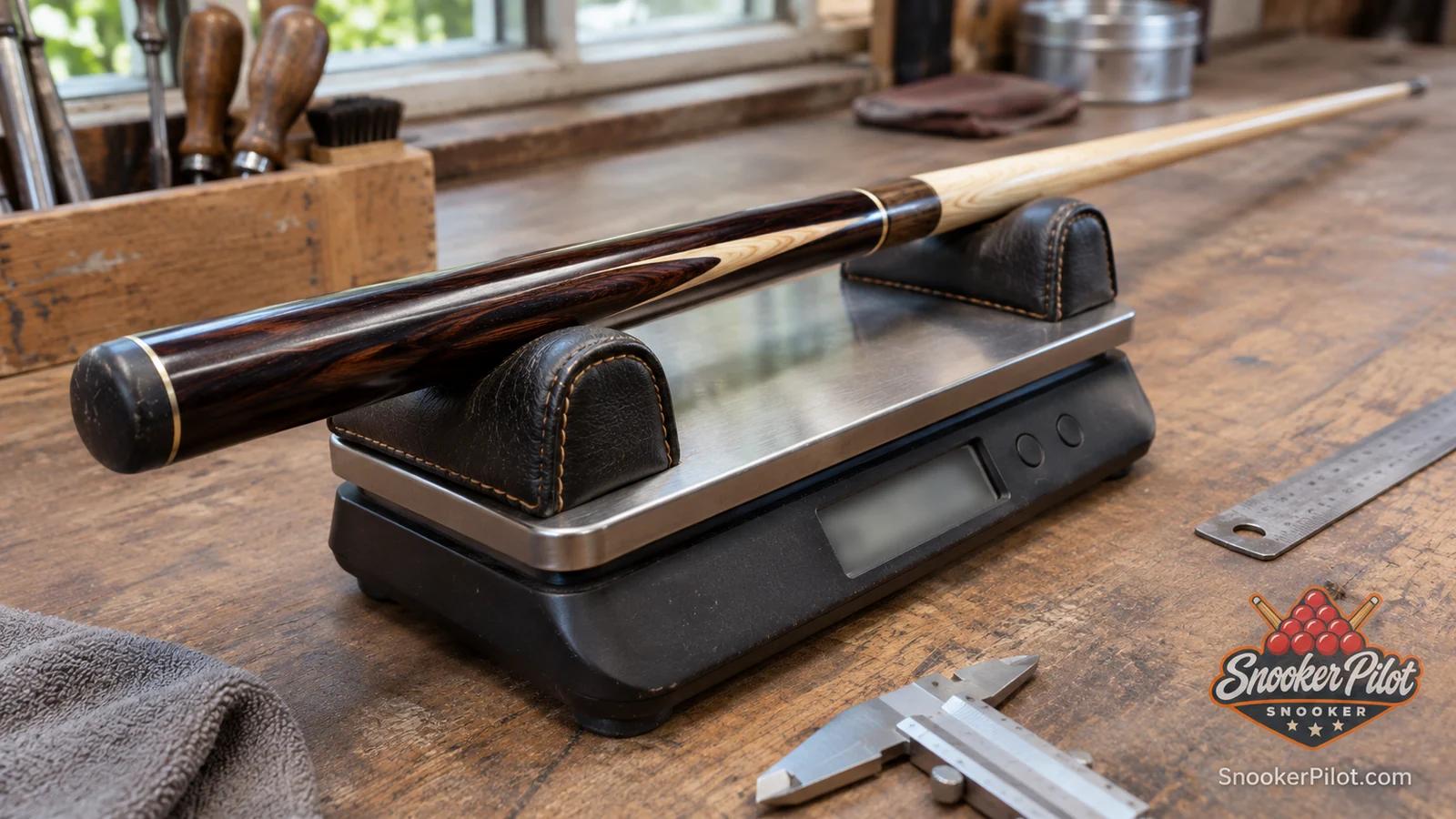
Read the actual weight, not just the category
Labels such as medium and heavy are manufacturer categories, not a universal fitting system. Check the stated ounces or grams for the individual cue. For orientation, eighteen ounces is approximately 510 grams and nineteen ounces approximately 539 grams. Those conversions are not recommended target weights. A model may be offered across a range, so two cues sharing its name can still differ. Ask the seller to confirm the actual example you are testing before using its specification as your reference.
Consider where the weight sits
Total mass alone does not describe the balance you feel in your grip. Two cues with similar weights may feel different because their balance points, lengths and butt shapes differ. A cue can seem cumbersome or lively for reasons beyond the number on its label. Check whether you can keep the cue stable through your normal preparation and delivery. Try it with the case and extension arrangements you actually intend to use, rather than choosing a specification that is inconvenient in ordinary play.
How to Choose Your First Snooker Cue: A Practical Buying Guide
Use a fair comparison
On the same table, test a short familiar pot, a controlled stop and a moderate position shot with each cue. Give both a fair set of attempts instead of choosing after one successful power stroke. Keep the cue-ball and object-ball positions consistent. Notice whether you squeeze the grip or change tempo to manage the cue. If tip size and condition also differ, record that fact: the test is comparing complete cues, not isolating weight in a laboratory.
Choose repeatability and allow adaptation
A heavier cue does not automatically repair an unsteady stroke, and a lighter one does not automatically create finesse. Select a complete cue that lets you deliver comfortably and repeatedly. Keep notes on the examples tried, including balance and tip, and ask a coach or experienced retailer for observation. Once you have a suitable option, practise with it for a consistent period rather than changing equipment after every loss. Table conditions, opponent and decision-making still influence your scores.
At your club with SnookerPilot
SnookerPilot can retain local player records while the player adapts to a different cue. Compare a run of genuine games and break records, with separate notes about the equipment used. The software does not calculate an ideal cue weight or prove that a cue caused a result. It helps club staff keep the right players, TV scoreboards and completed-game records together while those comparisons are made.
Compare the packages