
How to Track Snooker Club Revenue, Table Usage and Player Statistics
Build a useful operating review from recorded games while separating charges, cash received and profit.

Start with consistent game records
Use stable player and table identities, close completed games correctly and check the recorded amount. Keep tournament games identifiable and free games visible. A report cannot repair a week of inconsistent entries by itself. Give authorized staff a clear correction procedure and reconcile unusual values before comparing periods. Preserve backups so historical review does not depend on one unprotected device.
Separate charges from cash and profit
Recorded game amounts show the charges entered for play. They are not automatically proof that cash reached the till, nor do they include all business costs. Reconcile payments through your financial process and keep rent, wages, tax and maintenance separately. Label a total accurately. A busy scoreboard can coexist with weak cash collection or high costs, so avoid reading game revenue as profit.
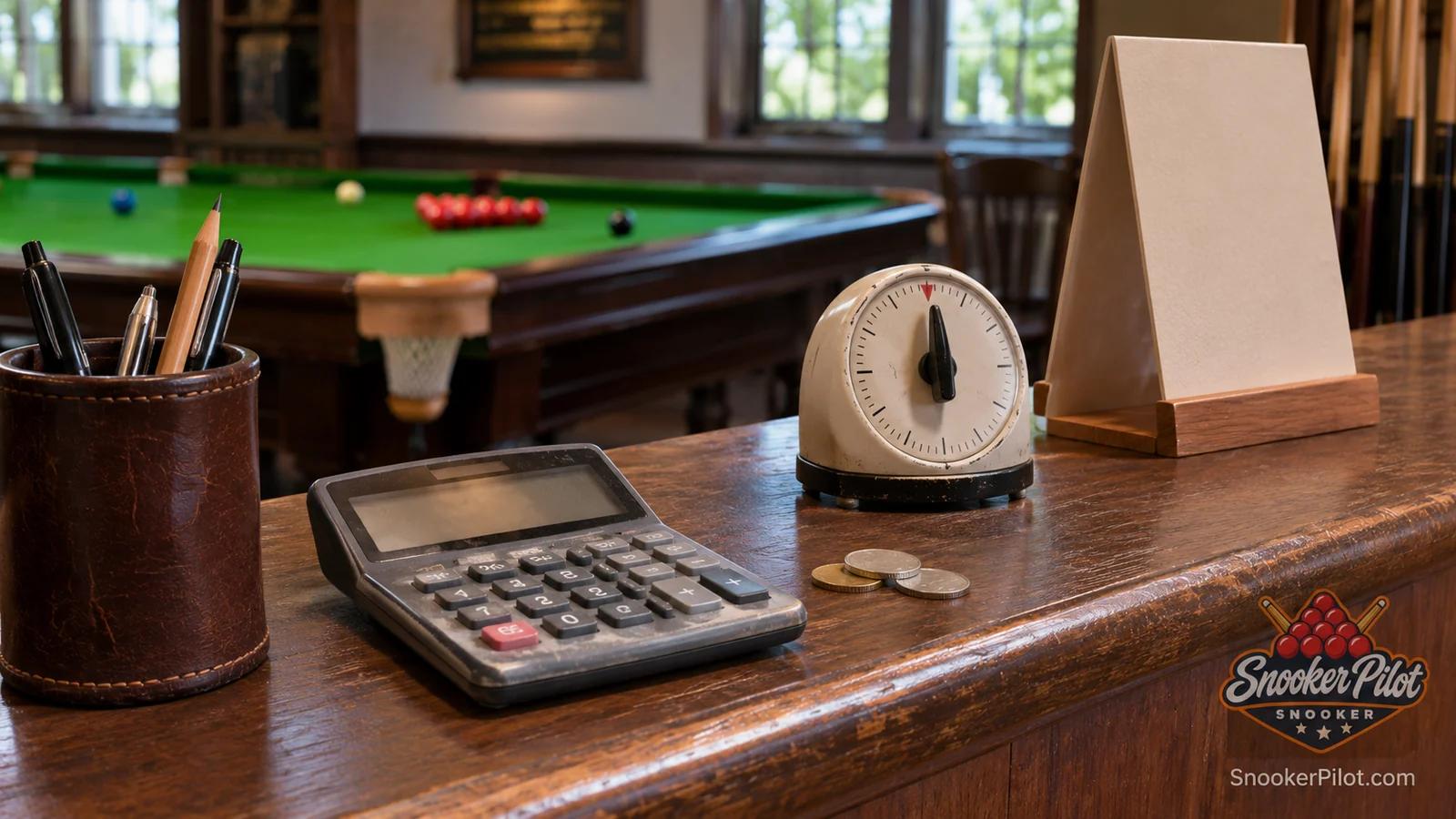
How to Open a Snooker Club: Premises, Equipment and Startup Planning
Compare usage with available capacity
Review recorded durations by table and comparable opening periods. As an illustration, 12 occupied table-hours out of 24 available is 50% utilization, if the time definitions and completeness are consistent. Do not count overlapping intervals twice. Separate tournament sessions and free promotions when interpreting changes. A shorter business day or a closed table can otherwise make two weeks look misleadingly different.
Use player statistics for the right questions
Best break, games and wins describe different aspects of participation. Keep identities consistent and avoid declaring causation from a small sample. Review a quiet table, a changing charge average or an unusual correction, then investigate the operational reason. Combine statistics with staff knowledge and a repeatable reporting period, including the club’s timezone and business-day boundary.
At your club with SnookerPilot
SnookerPilot provides local history, player information and club reports, with CSV exports and backup workflows. Tournament games retain their actual table pricing and are excluded from loyalty. Every base plan needs the optional $50/year add-on for website access to club history, records and statistics. Authorized game-price corrections should be checked during reconciliation, not hidden from the review.
Compare the packages