
The Snooker Line-Up Drill: How to Practise It at Different Skill Levels
Adapt the line-up drill to your level, connect reds and colours with purpose and measure the transition that ends your break.
Give the layout a clear purpose
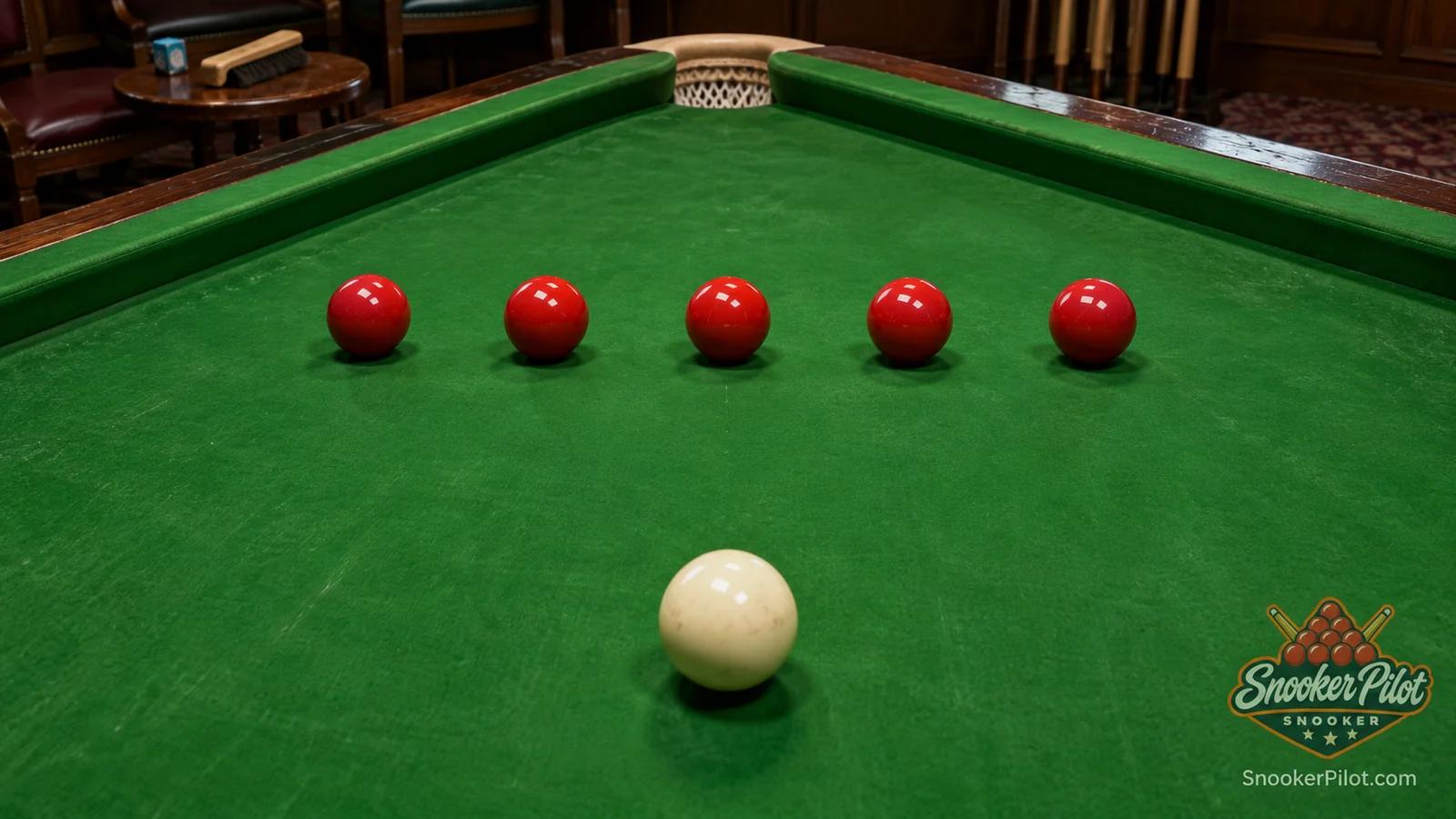
A line-up drill places reds in an accessible arrangement so you can practise linking pots with positional play. There is no single version that every player must complete. The arrangement should expose the skill you want to improve: choosing a colour, controlling the cue-ball distance or approaching the next red from a useful side. Start with enough space around the balls to see the routes. A line of fifteen reds can look impressive while teaching little if the exercise ends before you reach a meaningful position decision.
Start small and make success repeatable
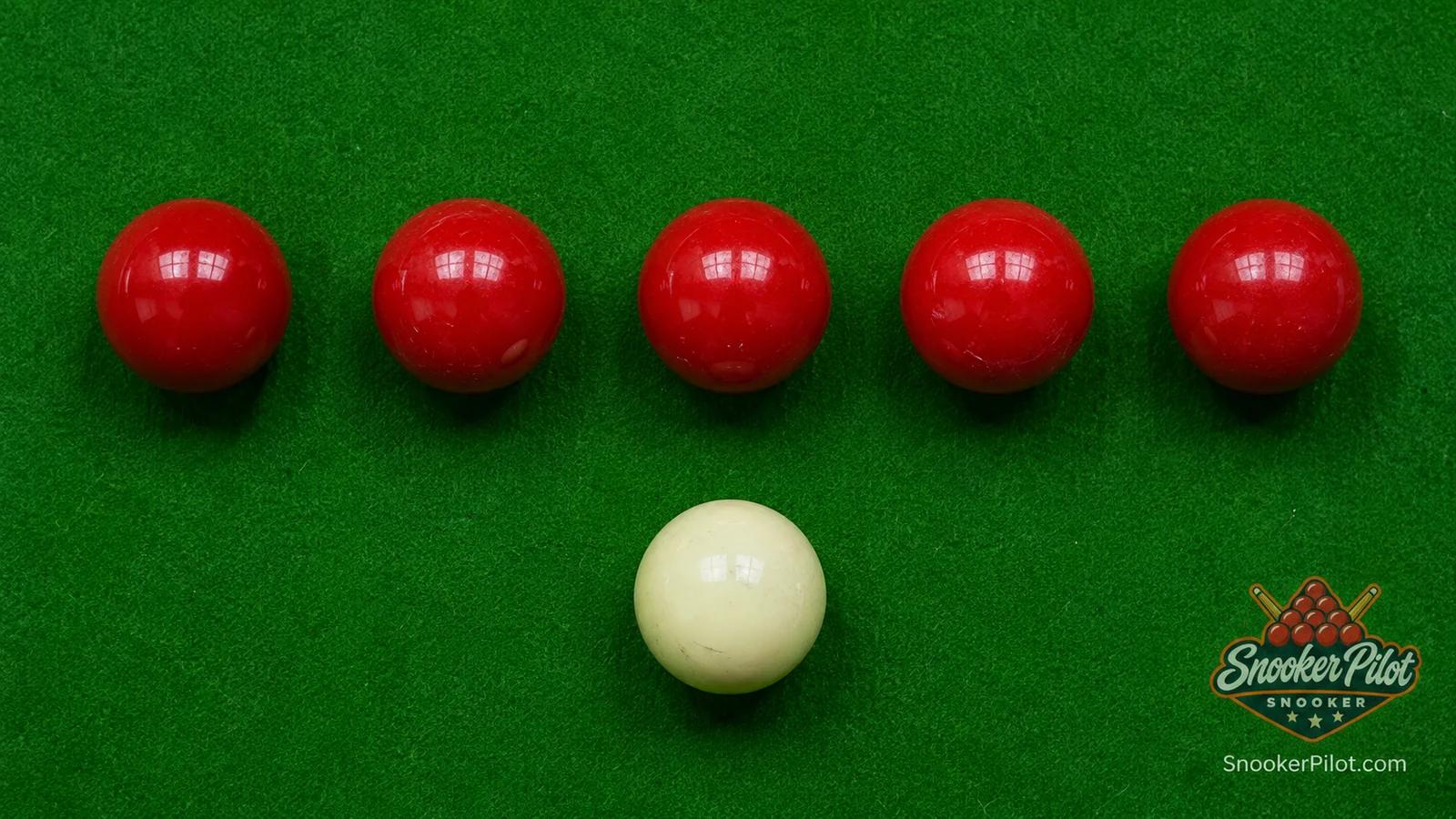
For an early version, use a few reds with clear access to a colour and generous room for white. Your first aim is two connected red-colour pairs rather than a maximum. Repeat the same starting layout so you can compare attempts. When one link repeatedly fails, isolate the colour-to-red position rather than celebrating the opening pot again. If the task remains mostly guesswork, reduce the number of reds or shorten the required travel. Easier, informative practice is more useful than constant early failure.
Add constraints for stronger players
As the small layout becomes reliable, add reds or limit the colour choices. Another progression is to require a chosen finishing zone before the next red. Change one constraint at a time so you know why the task became harder. Do not automatically restart from the beginning after every error if the same late transition needs work. Spend part of the block repeating that difficult connection. Keep track of the layout used: a high score on an open line is not directly comparable with a restricted-colour version.
Move the learning back into match play
Finish by moving a few reds into less convenient, more realistic positions and reassessing your route. Open line-ups remove traffic and tactical pressure, so success does not guarantee the same break in a competitive frame. Record both the exercise score and the quality of cue-ball control, using simple notes. If you keep losing the correct side of a colour, make that the next session’s focus. The purpose of the drill is useful decisions and repeatable connections, not merely a number that looks like a match record.
At your club with SnookerPilot
SnookerPilot can display scores and breaks in your real club games and save those results locally. Use a separate record for artificial line-up attempts so they do not inflate player records or paid-game history. Once a player enters club competitions, Club and higher packages support tournament brackets and table assignment, giving a clear setting in which to test whether the practice transfers.
Compare the packages